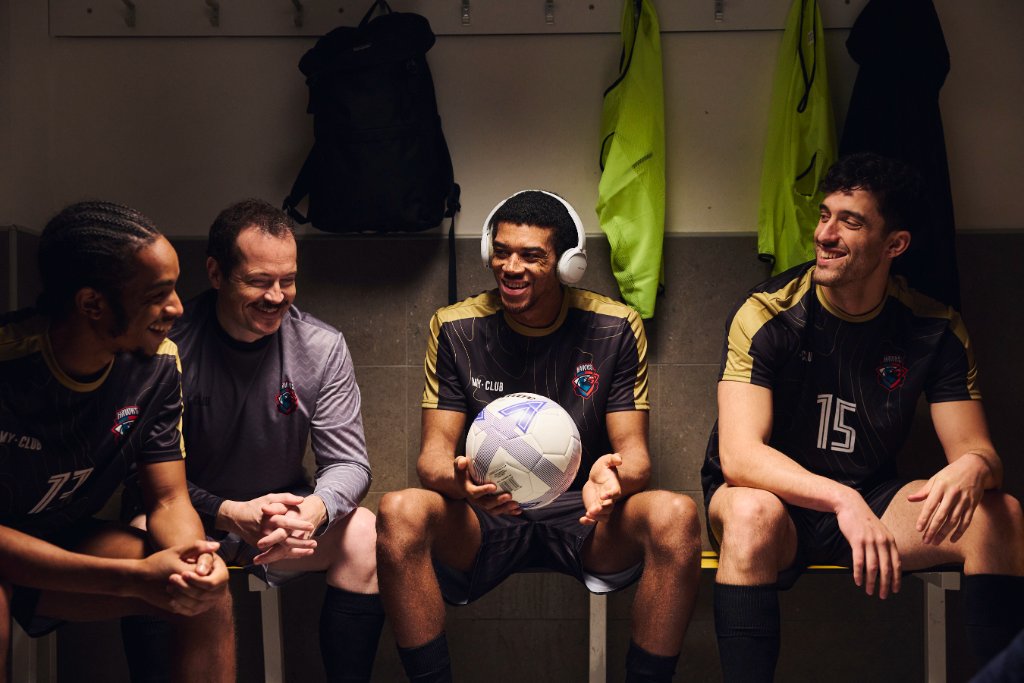
Every August, the grassroots football kit committee meets. The minutes follow a familiar pattern. Last year's shirts are tired. The under-12s have grown out of theirs. Player subs are already covering pitch hire, referee fees, and league registration. The kit money has to come from somewhere.
For most clubs, the somewhere is grassroots football sponsorship. A local business agrees to fund the kit. Their logo goes on the shirt. Both sides walk away with something they wanted. The conversation happens in pubs, on touchlines, and across kitchen tables every autumn across the UK.
This guide covers what grassroots football sponsorship looks like in 2026, how the money flows, what each side gets, and the four practical routes to find a sponsor before next season.
What grassroots football sponsorship looks like in 2026
UK grassroots football reaches an audience the professional game does not. Several million people play football across England every year, the vast majority at grassroots level: under-7 weekend tournaments, school-leaver Sunday league sides, masters teams in their fifties and sixties, women's and girls' teams launching in record numbers since the 2022 Lionesses Euro win.
These clubs run on volunteer hours and tight budgets. A junior football team typically needs new match kit every two or three seasons. A full set for sixteen players costs around £630. Multiply by the estimated 100,000 plus junior football teams in England and the annual replacement bill sits in the tens of millions of pounds.
The Premier League sponsorship model does not scale down. Liverpool's £61m front-of-shirt sponsorship in 2026 reaches several billion eyeballs across a season. A logo on a junior team shirt at a recreation ground in Berkshire reaches forty parents and forty opposition supporters at each match. Both relationships involve a business paying a club to put a logo on a shirt. Almost nothing else is the same.
Grassroots football sponsorship has something Premier League sponsorship does not: community proximity. A local business sponsoring a junior football team reaches a defined family audience in a specific catchment, builds local recognition paying back over years, and earns brand association with community investment delivering measurable CSR and reputational value.
The four types of grassroots football sponsorship
Most grassroots football sponsorship falls into one of four types. The same business sometimes funds more than one.
Match kit sponsorship is the most common. A business pays for one season of match kit (shirt, shorts, socks) for the team, and their logo appears on the front of the shirt. A full football match kit through Kit Funder costs £630 for a sixteen-player team. The kit lasts two to three seasons before replacement.
Training kit sponsorship covers warm-up tops, training shirts, and tracksuits. Less prominent on match day but more visible at training sessions, which often have more people present than a typical match. Training kit sponsorship through Kit Funder costs £1,124 per team as an opt-in addition to the match kit.
Ground or banner sponsorship places the business name at the home venue. Strong for businesses targeting a specific catchment because the visibility is fixed to one location. Costs vary widely depending on the venue.
Event or tournament sponsorship covers a specific competition or fundraising event. One-off rather than seasonal, sometimes with higher contributions because the event has a defined audience and media potential.
For most clubs, match kit sponsorship delivers the highest funding-to-effort ratio. Training kit and ground sponsorship usually layer on top once the match kit deal is in place.
What teams need, what businesses want
The conversation between a grassroots football team and a prospective sponsor often breaks down because each side talks past the other. Teams lead with what they need. Businesses listen for what they get.
Teams need three things from a sponsor: funding for the kit itself, fulfilment that delivers the kit to the players, and a process not consuming more volunteer hours than the funding is worth. The funding usually matters most. The fulfilment is often the source of friction. The process determines whether the sponsorship gets done at all.
Businesses look at the equation differently. Three things matter to a business deciding whether to sponsor a grassroots football team: visibility, audience, and association.
Visibility means how often the business logo appears in front of people. A typical junior team plays around twenty league matches a year, trains twice a week, and the kit is visible to around forty parents and forty opposition supporters at each match. The numbers are smaller than Premier League visibility but the engagement per impression is much higher.
Audience means who sees the logo. Local parents in their thirties and forties. Often the same demographic as the business's target customer. Often local residents within the business's natural catchment.
Association means what the sponsorship says about the business. A junior team sponsorship signals community investment, local roots, and family values. Exactly the brand attributes most small businesses want to project.
The strongest grassroots sponsorship proposals lead with what the business gets, not what the team needs.
The four routes to find a sponsor
There are four practical routes a grassroots football team uses to find a sponsor. Most successful clubs use two or three in combination.
Route one: traditional local outreach
The cold-approach route. A volunteer at the club identifies local businesses, writes a one-page proposal, sends emails and follows up. Costs nothing in money. Costs around twenty hours of volunteer time over three months. Success rate sits around 5%: most clubs send fifty enquiries to land one or two yeses.
Best for: clubs with a treasurer or marketing-minded volunteer prepared to invest the time.
Worth knowing: the timing has to start in March or April for a September kit handover. April or May is too late for many businesses.
Route two: existing relationships
The fastest route when it works. A current player's parent runs a business. A club volunteer has a business contact who already knows the club. A neighbour's company has a community marketing budget looking for a home. These warm introductions land far faster than cold outreach because the relationship pre-exists.
Best for: established clubs in areas with strong local business presence.
Worth knowing: existing relationships rarely scale to multiple sponsors. Once the warm introductions are exhausted, the club is back to cold outreach.
Route three: grants and public funding
Grants from the Football Foundation, Sport England, and other public funders cover much of grassroots football's annual budget but rarely cover routine kit replacement. Grants are stronger for capital projects, new team launches, and facility upgrades.
Best for: combining with sponsorship to cover different parts of the club budget.
Worth knowing: grant applications take months to process. Sponsorship moves faster.
Route four: AI matching through Kit Funder
The fourth route is newer. Kit Funder is a not-for-profit platform built specifically to remove the time cost of finding a sponsor. Teams register once in under five minutes. The platform matches the team with a local business looking to sponsor a grassroots football team in the area. My Club Group designs and delivers the co-branded kit. The team's colours and badge stay the same. The business logo goes on the shirt. The team pays nothing at any stage. 5% of every invoice goes to a local mental health charity.
Best for: teams without a volunteer with the time for traditional outreach.
Worth knowing: Kit Funder works alongside the other routes. The platform handles the matching, the proposal, the paperwork, and the fulfilment. The full set of practical funded kit routes is covered in our guide to how to get free football kit for your grassroots team, which compares grants, sponsorship, and AI matching side by side.
Where the sponsorship dynamic shifts
Women's and girls' football sponsorship
Sponsorship of women's grassroots football is a different conversation. The audience reaches a demographic many businesses struggle to access through other channels. The visibility opportunity tends to be higher than equivalent men's grassroots football because local press still treats women's grassroots fixtures as news. The brand association with girls' participation and equality delivers stronger CSR and reputational returns than men's equivalents.
Junior football and the kit cost barrier
A common barrier for new junior players is the cost of full match kit at sign-up. Parents face an immediate spend of £40 to £80 for shirt, shorts, socks, and boots before the child has played a competitive game. Clubs supplying funded match kit to every player remove this barrier entirely. Clubs running player recruitment programmes alongside sponsorship outreach find the two reinforce each other.
Senior and adult football
Adult grassroots football has different sponsorship dynamics. Senior teams typically have higher kit costs because of larger sizing and goalkeeper sets. The audience demographics are different. The visibility tends to be smaller because fewer parents attend senior matches. Most adult clubs use traditional outreach combined with player contributions to cover kit costs.
What businesses look for in a grassroots football sponsorship
A business deciding whether to sponsor a grassroots football team usually checks five things before committing.
Does the club have a clear local catchment matching our target audience? Sponsors want to reach customers, not only put logos on shirts.
Does the club run safeguarding properly? FA charter status, DBS-cleared coaches, and visible safeguarding policies reassure businesses on reputational risk.
Will the kit actually carry the logo for a full season? Some clubs receive kit funding and use it for other things. A clear written agreement protects both sides.
Is the sponsorship reportable? Many businesses sponsor for CSR, ESG, or B Corp reasons. Clubs supplying photos, match reports, and impact summaries make the sponsor's reporting easier and the renewal more likely.
What is the renewal pathway? One season is the entry point. Long-term sponsorship relationships develop when the first season delivers what was promised.
A grassroots football team addressing all five upfront wins sponsors faster than teams waiting for the questions.
The one thing to do this week
Three practical steps cover the next seven days.
First, list the local businesses with potential to sponsor. Family-owned, locally rooted, with a customer base overlapping with the club's audience, within five miles of the home ground.
Second, register the club on Kit Funder. Five minutes to fill in the team profile. The platform then matches with local sponsors automatically while the traditional outreach runs in parallel.
Third, write a one-page sponsorship proposal. Single photo of the team. Basic offer (one season of kit for £630). What the business gets in return. Three sentences about the club. Contact name and number.
The combination of an AI-matched sponsor through Kit Funder and one or two locally negotiated deals through traditional outreach gives the team the best chance of full kit funding for the season.
Your Kit, Funded
Register your team free at kitfunder.ai/teams. The form takes under five minutes.